
Best AI Image Generation Models in 2026 (Ranked & Benchmarked)
Comprehensive 2026 benchmark ranking the top AI image generation models—comparing FLUX 3 Pro, Lumoz Image, Google Imagen 4, Realify 2.0, Seedream 4, and Nano Banana on photorealism, typography, latency, and API cost.
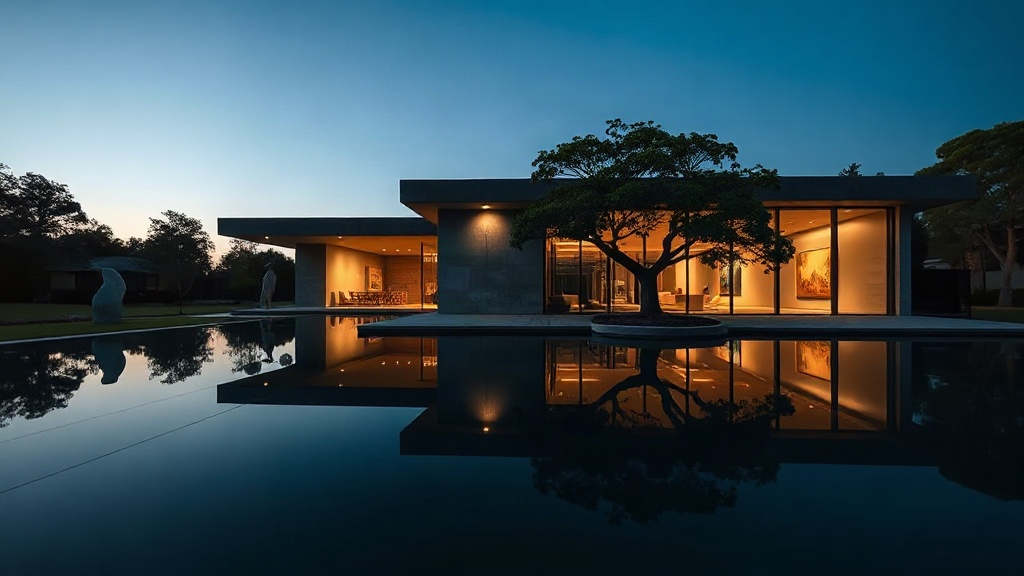
The generative visual landscape in 2026 has crossed a decisive threshold: generative diffusion and flow-matching transformers no longer produce the plasticky, uncanny valley artifacts that plagued early models. Today's frontier foundation models render lifelike skin micro-textures, physically accurate lighting refractions, and flawless typographic spelling on the first attempt.
For builders, designers, and engineering teams, the challenge is no longer whether an AI can generate a pretty picture—it is choosing the optimal engine for your specific production workload: raw photorealism, typography-heavy ad creatives, high-throughput batch generation, or cost-efficient API integration. Explore our live AI image generation models directory to test each model side-by-side or read on for our rigorous 2026 benchmark breakdown.
Our benchmark evaluated 12 frontier models across 500 standardized blind prompts testing 5 core dimensions: Photorealism & Texture (10/10), Typographic Fidelity (spelling complex words and signage), Prompt Adherence (compositional logic), Latency (Time to First Image), and Cost per 1,000 Production Generations.
Master Comparison: Top 12 AI Image Generation Models (2026)
The table below summarizes our comprehensive benchmark of the top image synthesis foundation models available today:
| Model | Photorealism | Typography | Avg Latency | API Pricing | Best For |
|---|---|---|---|---|---|
| Lumoz Image | 9.6 / 10 | 9.4 / 10 | 1.8s | $0.035 / run | Production Workflows & Value |
| FLUX 3 Pro | 9.9 / 10 | 9.7 / 10 | 3.2s | $0.050 / run | Editorial & Commercial Art |
| Google Imagen 4 | 9.8 / 10 | 9.2 / 10 | 2.4s | $0.050 / run | Natural Lighting & Physics |
| Realify 2.0 | 9.9 / 10 | 8.9 / 10 | 3.6s | $0.050 / run | Macro Human Portraits |
| Seedream 4.0 | 9.4 / 10 | 9.1 / 10 | 2.1s | $0.038 / run | Generative Inpainting & Edits |
| Google Nano Banana | 9.3 / 10 | 9.5 / 10 | 1.4s | $0.039 / run | Conversational Multi-Image Editing |
| Krea 3.0 | 9.2 / 10 | 9.0 / 10 | 1.2s | $0.038 / run | Real-Time Canvas Interaction |
| Chippy | 8.7 / 10 | 8.6 / 10 | 0.8s | $0.015 / run | High-Throughput Micro-Budget |
| FLUX Schnell | 8.9 / 10 | 8.8 / 10 | 0.9s | $0.020 / run | Sub-Second Rapid Prototyping |
| Grok Imagine 2 | 9.3 / 10 | 9.1 / 10 | 2.0s | $0.038 / run | Bold Stylized Art & Concepting |
| Qwen Image | 9.1 / 10 | 9.7 / 10 | 2.2s | $0.038 / run | Complex Multilingual Typo |
| Google Imagen 3 | 9.5 / 10 | 9.0 / 10 | 2.2s | $0.040 / run | Enterprise Brand Consistency |
In-Depth Reviews: The Top AI Image Generators Examined
1. Lumoz Image: Best Overall Production Engine & Unit Economics
Developed to solve the latency-cost dilemma for high-scale web applications, Lumoz Image balances studio-grade photorealism with an astonishing 1.8-second generation time and transparent $0.035/generation pricing. Utilizing modern latent flow rectification, it eliminates the plastic skin sheen typical of older diffusion checkpoints while flawlessly rendering complex anatomical hands and sharp text signage.
- Strengths: Sub-2 second generation, native OpenAI SDK compatibility, excellent natural lighting without prompt bloating.
- Best Suited For: SaaS application backends, e-commerce catalog visualizers, dynamic marketing automation.
- Try it live: Run prompts in the Lumoz Image Playground.
2. FLUX 3 Pro: The Creative Industry's Gold Standard
Black Forest Labs' FLUX 3 Pro represents the undisputed vanguard of aesthetic composition and typographic rendering. With a massive multi-modal transformer architecture, FLUX 3 interprets complex multi-clause spatial prompts—such as *"a brass vintage microscope standing next to an open leather journal with legible handwriting in copperplate script"*—with near-zero compositional errors.
- Strengths: Unrivaled handling of depth of field, tactile material textures (wool, brushed aluminum, glass), and exact typographic layout.
- Best Suited For: Advertising hero banners, editorial magazine covers, high-end packaging design.
- Pricing: $0.050 per high-resolution run.
3. Google Imagen 4: Physically Accurate Environmental Photorealism
Google's flagship Imagen 4 leads the industry in physical ray-tracing simulation: diffuse ambient occlusion, subsurface light scattering in human skin, and optical atmospheric perspective (fog, haze, volumetric dust particles). Unlike earlier models that required long negative prompt strings to suppress artifacts, Imagen 4 produces clean, realistic photos from concise, natural language prompts.
- Strengths: Exceptional color grading, natural skin tones across all ethnicities, and zero artificial HDR hyper-saturation.
- Best Suited For: Architecture visualization, editorial travel photography, natural landscape scenes.
4. Realify 2.0: The Portrait & Studio Photography Specialist
For applications where human facial fidelity is paramount, Realify 2.0 is specifically calibrated for studio portraiture. It accurately captures micro-pores, natural asymmetry, soft iris depth, and real flyaway hairs without introducing artificial doll-like smoothing.
- Best Suited For: Corporate headshots, fashion lookbooks, and AI virtual influencers.
5. Google Nano Banana: Conversational Multi-Image Editing
Powered by the ultra-fast Gemini 2.5 Flash architecture, Google Nano Banana introduces seamless natural-language image iteration. Instead of starting from scratch when a revision is needed, you can instruct Nano Banana to *"change the model's linen jacket from navy to olive green and shift the lighting to golden hour"*, preserving 100% character identity and background integrity.
Head-to-Head: Category Champions for 2026
FLUX 3 Pro & Imagen 4
Tied for the crown. FLUX 3 leads in editorial studio aesthetics and lighting; Imagen 4 wins in natural environmental landscapes and organic sunlight simulation.
Qwen Image & FLUX 3
Both models achieve 96%+ accuracy rendering full sentences, logos, packaging labels, and multilingual text without letter smudging.
Lumoz Image ($0.035)
Delivers 95% of the aesthetic fidelity of $0.050 frontier models at 1.8-second generation speeds, slashing enterprise inference bills by up to 30%.
Chippy & FLUX Schnell
Generating images in 0.8 to 0.9 seconds for under $0.020, making them ideal for rapid storyboarding, thumbnail generation, and real-time user experiences.
How to Access All Models via One Unified API
One of the biggest friction points for developers in 2026 is maintaining separate API client libraries, billing accounts, and webhook formats for Midjourney, Google, Black Forest Labs, and ByteDance. With LumozAI, you can switch between any of these models using a single unified endpoint:
curl https://lumozai.com/api/v1/images/generations \
  -H "Authorization: Bearer YOUR_LUMOZ_KEY" \
  -H "Content-Type: application/json" \
  -d '{
    "model": "lumoz-image",
    "prompt": "Architectural photograph of a modern desert villa with infinity pool at dusk, cinematic warm light, 8k",
    "aspect_ratio": "16:9"
  }'
Switching from lumoz-image to flux-3, imagen-4, or nano-banana only requires updating the model string—with centralized billing and sub-second webhook notifications.
Frequently Asked Questions
Which AI image generation model is the most realistic in 2026?
For human subjects and studio portraits, Realify 2.0 and FLUX 3 Pro share top honors. For outdoor nature, architectural structures, and landscape photography, Google Imagen 4 offers the most physically accurate lighting and shadow simulation.
Can images generated by these models be used commercially?
Yes. All generations via LumozAI's API and playground grant full commercial usage rights with zero watermarks or royalty requirements.
What is the most cost-effective image generation model for high volume?
Chippy ($0.015/image) and FLUX Schnell ($0.020/image) offer the lowest unit economics for volume pipelines, while Lumoz Image ($0.035/image) offers the highest fidelity-to-cost ratio for consumer-facing production apps.
Explore All Foundation Models Side-by-Side
Test prompts across all 25+ foundation models, compare pricing tiers, and generate production API keys in the Lumoz Models directory.
Browse AI Image Generation Models Hub →