Introduction
The way we shop for clothes has changed dramatically in the last decade. From online catalogs to AR-powered fitting rooms, technology keeps reshaping the fashion industry. Today, one of the most promising innovations is AI Fashion Try-On.
Instead of relying on guesswork or static product photos, shoppers can now see how outfits would look on a model—or even on themselves—before making a purchase. For fashion retailers and e-commerce businesses, this technology doesn’t just improve the customer experience; it also boosts sales and reduces costly returns.
In this article, we’ll examine what AI Fashion Try-On is, how it works, its benefits for retailers and shoppers, implementation tips for developers, and future trends you should watch.
What is AI Fashion Try-On?
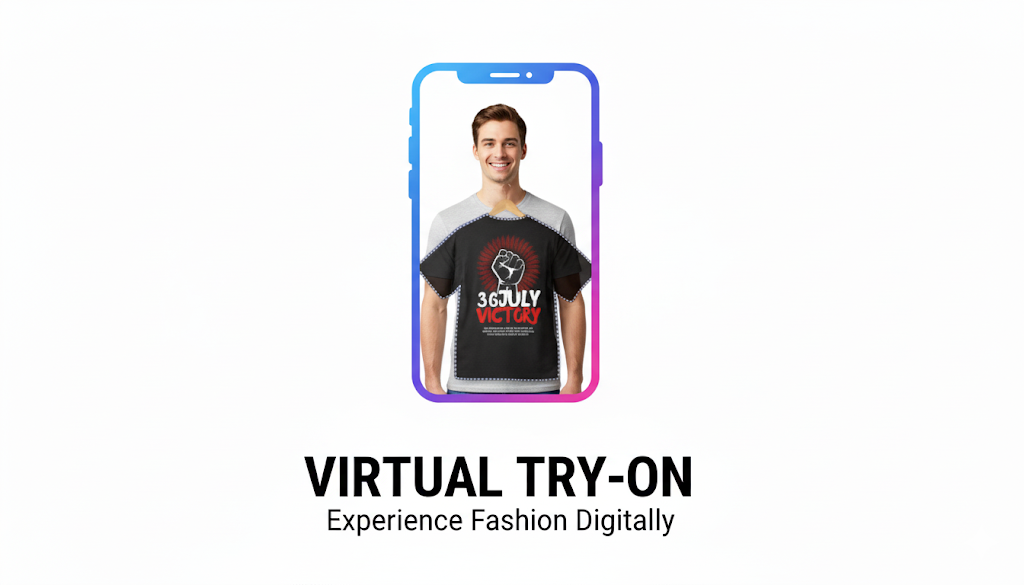
AI Fashion Try-On is a technology that uses artificial intelligence to digitally place clothing items onto a model or a customer's photo. Unlike traditional augmented reality (AR) fitting rooms that rely on live camera overlays and motion tracking, AI try-on tools use computer vision, deep learning, and generative AI to create high-quality, realistic static previews.
Use cases include:
- Online fashion retailers offering digital fitting rooms
- Developers building fashion tech apps and plugins
- Shoppers experimenting with styles before purchasing
How AI Fashion Try-On Works
The pipeline is straightforward but relies on complex models under the hood:
- Model Image Selection — Choose a model photo or upload a user image.
- Garment Input — Select or upload the clothing image (catalog shot, pattern, or texture).
- AI Fitting Process — Pose estimation, segmentation, warping, and generative rendering map the garment onto the model.
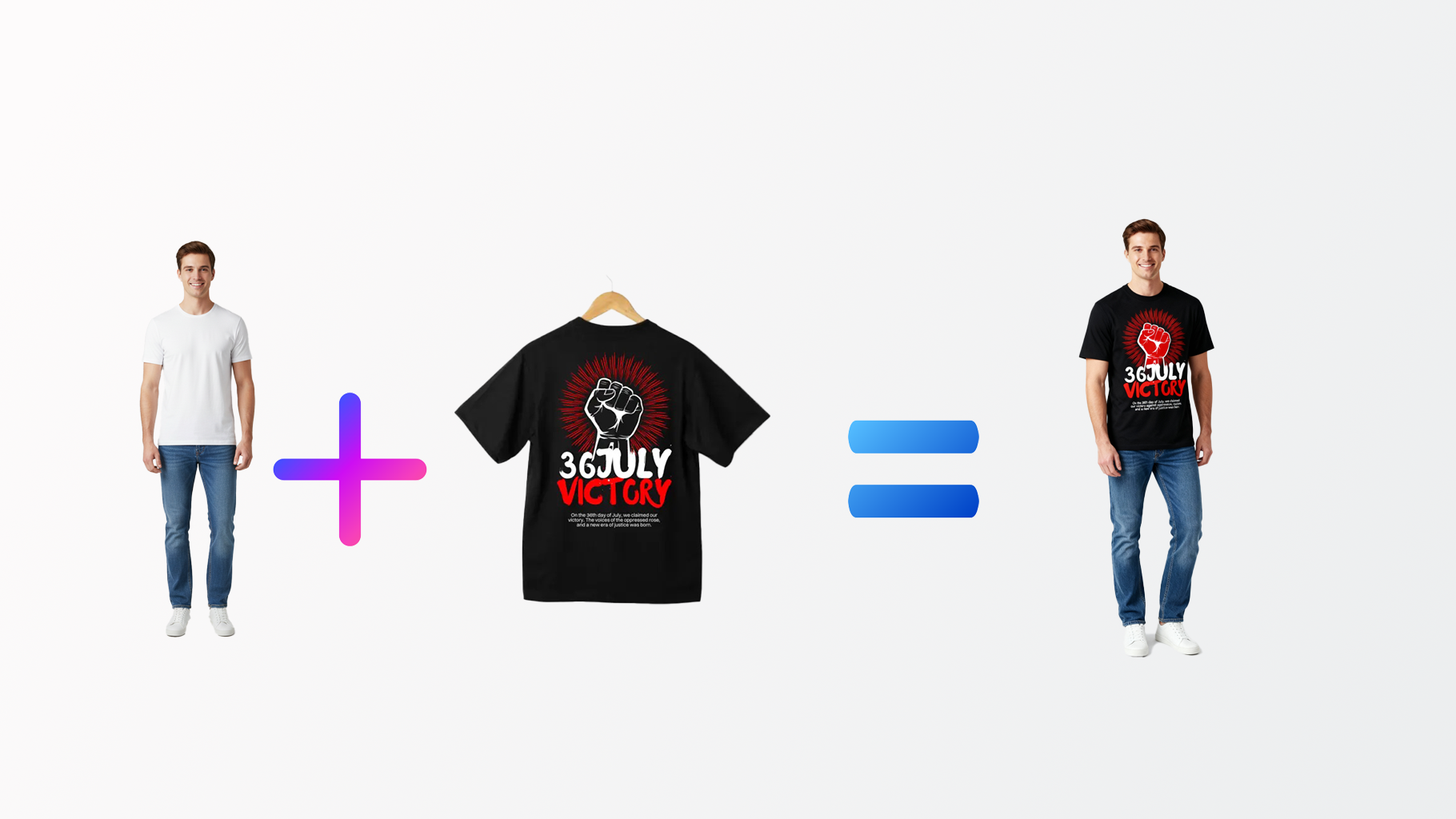
- Output Generation — The system produces a realistic preview: Dress + Model = Model with the Dress.
Modern systems use a mix of pose estimation (OpenPose / MediaPipe), image segmentation, warping algorithms, and generative models (GANs or diffusion models) to achieve natural-looking results.
Benefits of AI Fashion Try-On for E-Commerce
Increased Sales Conversions
When shoppers can visualize how a garment looks on a relatable model—or on themselves—they feel more confident completing the purchase. Visual confidence translates directly into higher conversion rates.
Reduced Return Rates
Fit and appearance are top reasons for returns in online fashion. AI try-on helps customers judge fit, drape, and style, which reduces purchases made based on incorrect assumptions and lowers return costs.
Personalized Shopping Experiences
AI try-on can be combined with personalized recommendations to deliver customized outfits to individual shoppers, improving engagement and loyalty.
Competitive Advantage
Retailers who adopt AI try-on demonstrate innovation and customer focus, standing out in an increasingly crowded e-commerce landscape.
Why Shoppers Love AI Fashion Try-On
- Convenience of seeing outfits digitally without physical fitting rooms.
- Ability to try multiple outfits in seconds.
- Share try-on results on social media for opinions.
- Confidence in fit, style, and color before buying.
AI Fashion Try-On for Developers
Developers can leverage APIs like LumozAI to integrate AI fashion try-on features into apps and websites. This enables:
- Custom virtual fitting rooms for e-commerce platforms.
- Personalized styling apps and outfit recommendation tools.
- Opportunities to innovate in fashion tech startups.
Challenges and Limitations of AI Fashion Try-On
- Accuracy across diverse body types and sizes.
- Lighting and image quality affecting realism.
- Ethical considerations, including data privacy.
- Cost and technical barriers for small retailers.
The Future of AI Fashion Try-On
AI fashion try-on is evolving rapidly. Key trends include:
- Integration with AR glasses and metaverse shopping.
- AI personal stylists recommending complete outfits.
- Sustainable fashion by reducing returns and waste.
- Digital-first shopping experiences for online consumers.
Case Studies and Real-World Examples
- Walmart’s Zeekit: Virtual fitting rooms for online shoppers.
- Zalando: AI-powered sizing and try-on for European markets.
- LumozAI: Offers both a live try-on tool and developer API for custom applications.
How to Implement AI Fashion Try-On in Your Business
- Choose the right platform (LumozAI, Vue.ai, Zeekit).
- Integrate seamlessly with product pages.
- Test for accuracy with diverse images and garments.
- Market the feature prominently to attract shoppers.
Comparing AI Fashion Try-On Tools
- LumozAI: Flexible, easy API integration, realistic outputs.
- Vue.ai: Enterprise-focused, advanced analytics.
- Fashwell: Strong AI tagging and try-on features.
- Zeekit (Walmart): Large-scale retail solution.
AI Fashion Try-On in the Metaverse & Web3
- Virtual avatars wearing digital fashion items.
- NFT-based digital wardrobe try-ons.
- Immersive shopping experiences in VR malls.
Quick Takeaways
- AI Fashion Try-On enables realistic virtual outfit previews.
- Retailers gain higher conversions and lower return rates.
- Developers can integrate APIs to enhance fashion apps.
- Shoppers enjoy convenience, confidence, and personalization.
- The future merges AI, AR, and metaverse experiences.
Conclusion
AI Fashion Try-On is redefining online shopping by giving customers a realistic view of outfits before purchase. Retailers benefit from reduced returns, higher conversions, and personalized experiences. Developers have opportunities to innovate using APIs, while shoppers gain convenience and confidence in style choices.
For e-commerce businesses and fashion tech developers, integrating AI try-on tools like LumozAI is now essential to stay competitive. Experiment with the technology, start small, and enhance your customers’ shopping experience today.
FAQs
How accurate is AI fashion try-on?
Accuracy is generally high, but it depends on image quality, clothing type, and AI model sophistication.
Can AI fashion try-on work for all body types?
Yes, modern AI models are trained on diverse body shapes and sizes, though results may vary slightly.
What is the difference between AI try-on and AR try-on?
AI try-on generates realistic static images of clothing on models or users, while AR try-on overlays garments in real-time via a camera feed.
Is there an API for AI fashion try-on developers?
Yes, platforms like LumozAI provide APIs for developers to integrate try-on features into apps and websites.
How can e-commerce stores integrate AI try-on features?
Through APIs, plugins, or SaaS platforms that link product images to AI-powered try-on engines.
💬 What do you think about AI Fashion Try-On—would you trust it when shopping online? Share your thoughts below and don’t forget to share this article with your network if you found it useful!